IDs and KYC
IDs and KYC

EnterFlow AI
•
Dec 11, 2024
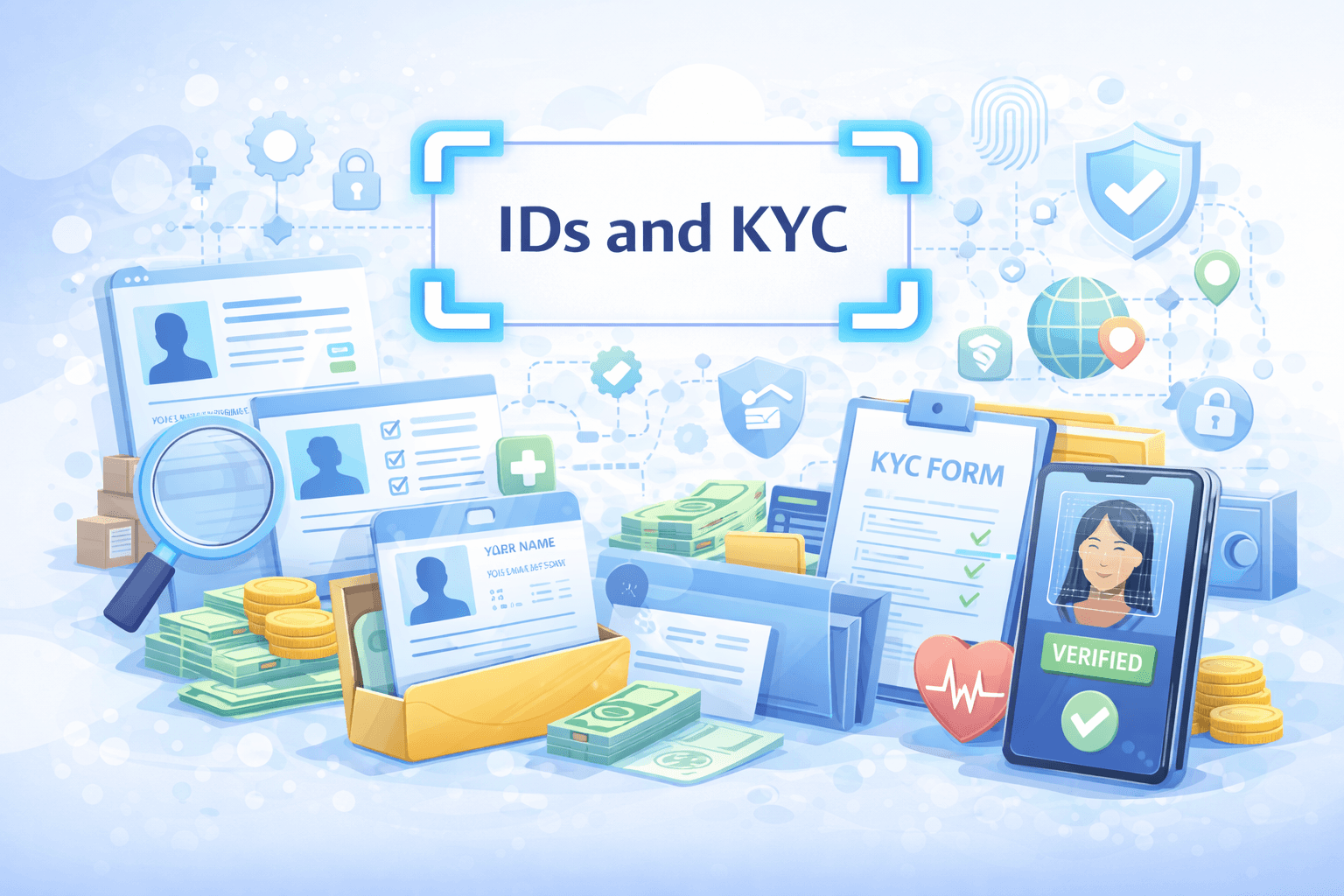
IDs & KYC
Identity verification and KYC workflows depend on documents that are highly variable and often low quality: phone photos, scans, glare, cropped edges, different languages, and multiple document types across jurisdictions. At the same time, the tolerance for mistakes is low—because errors can create compliance risk, fraud exposure, and customer friction.
Enterflow applies AI OCR and document workflows to IDs and KYC to extract structured identity data, perform validation and consistency checks, and route exceptions for human review—while supporting privacy-first and private-cloud deployment options.
Document types we support in KYC workflows
Common inputs include:
passports
national ID cards (front/back)
driver’s licenses
residency permits
proof of address (utility bills, bank letters, statements)
business KYC documents (company registration, certificates, beneficial ownership evidence)
supporting attachments and customer-submitted forms
We build around your target geographies, document types, and regulatory requirements.
What we typically extract (structured output)
Core identity fields
full name (including multi-part names)
date of birth
nationality (where present)
document type and issuing country
document number / ID number
issue date and expiry date
sex marker (if present on the document)
address fields (on ID or proof-of-address documents)
Machine-readable zones and barcodes (when available)
MRZ parsing (passports and many IDs)
PDF417 barcodes (common on driver’s licenses in some regions)
embedded structured zones where applicable
Document evidence and metadata
cropped/normalized images of key regions (optional)
page-side classification (front/back)
signature presence (where relevant)
extracted fields with confidence signals and source references
Validation and fraud-resistant checks (how we reduce risk)
KYC is not just extraction; it’s verification support. We implement configurable checks such as:
Consistency checks
MRZ vs visual zone field consistency (name, document number, dates)
expiry date validity and future-date constraints
issuing country vs document type plausibility rules
address format and postal code validation (where applicable)
Completeness and quality checks
image quality signals (blur, glare, low resolution, cut-off edges)
required-side presence (front and back when needed)
missing mandatory fields flagged early
Duplicate and anomaly detection (optional)
detect repeated document numbers across submissions
detect unusually frequent submissions per entity
flag suspicious patterns for manual review
Important: fraud determinations should remain with trained reviewers; our workflows focus on signal generation and structured consistency checks.
Human-in-the-loop by design
For IDs and KYC, full automation is rarely the right goal. We typically implement:
confidence thresholds that determine auto-accept vs review
reason-coded exception queues (why the case needs review)
traceability to source regions (so reviewers can confirm quickly)
This reduces review time while keeping control with compliance teams.
Outputs designed for onboarding and compliance systems
We provide outputs your systems can consume:
normalized JSON identity profile (fields + provenance)
standardized date/name formats
validation results (pass/fail/review + reason codes)
optional redaction workflows (mask document numbers or DOB in stored artifacts)
optional export to CSV for operational reconciliation
Key data we track (so performance is measurable)
For ID and KYC workflows, we typically track:
field-level accuracy for high-criticality fields (ID number, name, DOB, expiry)
auto-accept rate vs manual review rate
false accept / false reject rate (critical for risk control)
time-to-decision (submission → decision)
image quality failure rate and top causes (glare, blur, cropping)
re-submission rate (customer friction indicator)
Privacy, security, and deployment options
KYC data is among the most sensitive categories of personal data. We support:
private cloud deployments (AWS, Azure, or GCP) with private networking
encryption in transit and at rest
strict IAM/RBAC, audit logs, and environment separation
configurable retention and deletion policies
data minimization (process only required fields)
optional PII redaction and tokenization patterns
As a default posture: customer data is processed only for your project unless explicitly agreed otherwise.
Typical applications
fintech onboarding and account opening
insurance policy onboarding
B2B vendor onboarding (business KYC + beneficial ownership evidence)
marketplace seller verification
regulated access workflows (age/identity verification, compliance gates)
Ready to improve KYC speed without increasing risk?
If you share:
your target countries/document types,
the acceptance criteria (required fields and checks),
and a small sample set (with sensitive values redacted if needed),
we can propose:
an extraction and validation schema,
review thresholds and exception routing,
integration approach into your onboarding stack,
and a pilot plan to measure false accept/reject rates.
Contact: info@enterflow.ai
Website: https://enterflow.ai/
IDs & KYC
Identity verification and KYC workflows depend on documents that are highly variable and often low quality: phone photos, scans, glare, cropped edges, different languages, and multiple document types across jurisdictions. At the same time, the tolerance for mistakes is low—because errors can create compliance risk, fraud exposure, and customer friction.
Enterflow applies AI OCR and document workflows to IDs and KYC to extract structured identity data, perform validation and consistency checks, and route exceptions for human review—while supporting privacy-first and private-cloud deployment options.
Document types we support in KYC workflows
Common inputs include:
passports
national ID cards (front/back)
driver’s licenses
residency permits
proof of address (utility bills, bank letters, statements)
business KYC documents (company registration, certificates, beneficial ownership evidence)
supporting attachments and customer-submitted forms
We build around your target geographies, document types, and regulatory requirements.
What we typically extract (structured output)
Core identity fields
full name (including multi-part names)
date of birth
nationality (where present)
document type and issuing country
document number / ID number
issue date and expiry date
sex marker (if present on the document)
address fields (on ID or proof-of-address documents)
Machine-readable zones and barcodes (when available)
MRZ parsing (passports and many IDs)
PDF417 barcodes (common on driver’s licenses in some regions)
embedded structured zones where applicable
Document evidence and metadata
cropped/normalized images of key regions (optional)
page-side classification (front/back)
signature presence (where relevant)
extracted fields with confidence signals and source references
Validation and fraud-resistant checks (how we reduce risk)
KYC is not just extraction; it’s verification support. We implement configurable checks such as:
Consistency checks
MRZ vs visual zone field consistency (name, document number, dates)
expiry date validity and future-date constraints
issuing country vs document type plausibility rules
address format and postal code validation (where applicable)
Completeness and quality checks
image quality signals (blur, glare, low resolution, cut-off edges)
required-side presence (front and back when needed)
missing mandatory fields flagged early
Duplicate and anomaly detection (optional)
detect repeated document numbers across submissions
detect unusually frequent submissions per entity
flag suspicious patterns for manual review
Important: fraud determinations should remain with trained reviewers; our workflows focus on signal generation and structured consistency checks.
Human-in-the-loop by design
For IDs and KYC, full automation is rarely the right goal. We typically implement:
confidence thresholds that determine auto-accept vs review
reason-coded exception queues (why the case needs review)
traceability to source regions (so reviewers can confirm quickly)
This reduces review time while keeping control with compliance teams.
Outputs designed for onboarding and compliance systems
We provide outputs your systems can consume:
normalized JSON identity profile (fields + provenance)
standardized date/name formats
validation results (pass/fail/review + reason codes)
optional redaction workflows (mask document numbers or DOB in stored artifacts)
optional export to CSV for operational reconciliation
Key data we track (so performance is measurable)
For ID and KYC workflows, we typically track:
field-level accuracy for high-criticality fields (ID number, name, DOB, expiry)
auto-accept rate vs manual review rate
false accept / false reject rate (critical for risk control)
time-to-decision (submission → decision)
image quality failure rate and top causes (glare, blur, cropping)
re-submission rate (customer friction indicator)
Privacy, security, and deployment options
KYC data is among the most sensitive categories of personal data. We support:
private cloud deployments (AWS, Azure, or GCP) with private networking
encryption in transit and at rest
strict IAM/RBAC, audit logs, and environment separation
configurable retention and deletion policies
data minimization (process only required fields)
optional PII redaction and tokenization patterns
As a default posture: customer data is processed only for your project unless explicitly agreed otherwise.
Typical applications
fintech onboarding and account opening
insurance policy onboarding
B2B vendor onboarding (business KYC + beneficial ownership evidence)
marketplace seller verification
regulated access workflows (age/identity verification, compliance gates)
Ready to improve KYC speed without increasing risk?
If you share:
your target countries/document types,
the acceptance criteria (required fields and checks),
and a small sample set (with sensitive values redacted if needed),
we can propose:
an extraction and validation schema,
review thresholds and exception routing,
integration approach into your onboarding stack,
and a pilot plan to measure false accept/reject rates.
Contact: info@enterflow.ai
Website: https://enterflow.ai/
Contact us
info@enterflow.ai
EnterFlow AI empowers you to unlock your business potential with AI OCR models
Vienna, Austria
Contact us
info@enterflow.ai
EnterFlow AI empowers you to unlock your business potential with AI OCR models
Vienna, Austria
Contact us
info@enterflow.ai
EnterFlow AI empowers you to unlock your business potential with AI OCR models
Vienna, Austria